
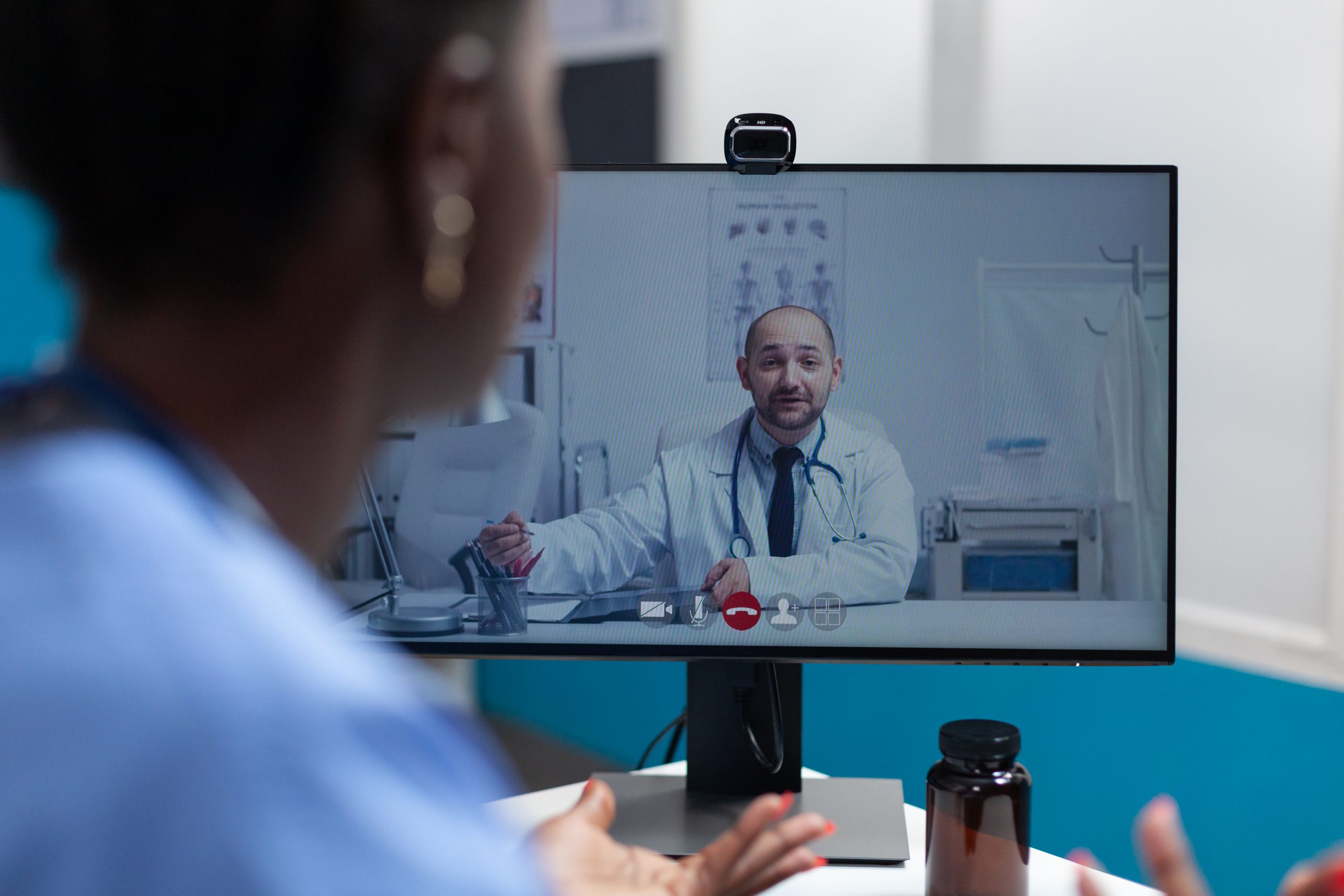
Access to healthcare has been a challenge in India. On the one hand, India has some of the best medical minds in the world. On the other hand, millions of people in rural areas still have to walk for hours to access basic medical care. There is a real divide, and honestly, it has been neglected for too long.
However, something has been happening over the last few years gradually at first, then suddenly. The vision of a scalable telemedicine solutions India is now becoming a reality. It’s happening right now, in small towns, on budget smartphones, and in homes where going to the hospital would cost them a day’s pay.
The problems that necessitated telemedicine are clear.
Let’s get a reality check. In India, there is about one doctor per 1,000 people, and in rural areas, the figures drop significantly. Tier-2 and tier-3 towns have too many patients at public hospitals. The wait is agonizing. There is very little access to specialists, unless you’re willing to travel to a metro.
But for pregnant women in villages in Odisha or elderly patients with diabetes in small towns in Bihar, it’s not simply inconvenient; it could be the difference between life and death.
Enter telemedicine, not so much a luxury as a solution to a very real problem.
In this context, what does “scalable” mean?
It can’t just be about video calls to doctors when discussing scalable telemedicine solutions India. A truly scalable solution can support 10 patients today and 10 million tomorrow without breaking, without compromising quality, and without being cost-prohibitive.
This requires several components, including strong digital infrastructure, trained healthcare personnel at local levels (also known as teleconsultation assistants), AI-based triage tools, multilingual support, and platforms that are usable even in low-bandwidth settings.
In 2020, India’s Telemedicine Practice Guidelines provided a proper legal framework to this entire sector. This has seen investment and innovation in the field steadily increasing since.
Apollo Telehealth: What a Mature Platform Looks Like
If you want to understand what a genuinely scalable telemedicine model looks like in practice, Apollo Telehealth is one of the clearest examples in the country.
Apollo Telehealth has been in this space for over two decades long before the COVID-19 pandemic forced everyone to suddenly care about remote healthcare. What they built over the years is not just an app or a helpline. It’s a layered system that connects patients at the village level with specialists sitting in cities, using a combination of trained local health workers, digital diagnostic tools, and a well-organized referral network.
Their reach today spans thousands of villages across multiple states. Patients in remote areas can access everything from basic consultations and chronic disease management to mental health support and follow-up care — all without leaving their district.
What makes Apollo Telehealth stand out is that they understood early on that technology alone isn’t enough. The human layer matters. Having a trained worker on the ground who can assist a patient during a teleconsultation — especially elderly patients or those who are not digitally confident makes an enormous difference in actual health outcomes.
The Role of Technology But Not Just Technology
AI is a cornerstone of modern, scalable telemedicine solutions India, playing a pivotal role in health assessments and diagnostics. Diabetic retinopathy screening via retinal analysis, remote evaluation of abnormal ECG readings, or even remote support in dermatology is no longer experimental. They’re being used on a large scale now.
Support for regional languages is now also a must-have. The idea of a telemedicine solution that is only provided in English or Hindi was never going to be effectively accessible in a country as linguistically diverse as ours.
Mobile-first design is also a crucial factor. The majority of users using these platforms are on Android handsets in rural areas and with a low monthly data plan. Platforms that have not optimized for this simply aren’t reaching the people who need them most.
The Challenges Yet to Be Faced with Honesty
There has been progress, but not enough. Limited digital literacy is still an obstacle. A lot of patients, especially seniors, still have trouble with the idea of consulting a doctor through a screen. Remember, trust comes in time.
There is a need for better data privacy measures. Patients must be assured that their health information is safe.
The issue of payment is another concern. Health insurance coverage for teleconsultations is improving but remains patchy. Clear policies on reimbursement are necessary to ensure the sustainability of telemedicine solutions, even for the poorest in our society.
The question is, where is this all going?
In fact, scalable telemedicine solutions India aren’t a substitute for physical medical infrastructure. They are a bridge—to give us greater reach, eliminate unwarranted travel, and ensure that specialist knowledge doesn’t remain in large-city hospitals.
Thoughtfully implemented, this model works, as has been seen with platforms such as Apollo Telehealth. The next step is about scaling up to the last mile, to the community level, to creating more trust with community members, and to make sure that digital health solutions benefit everyone who has a decent internet connection and a smartphone.
The journey of healthcare in India is still underway. Telemedicine is one of its key chapters.