
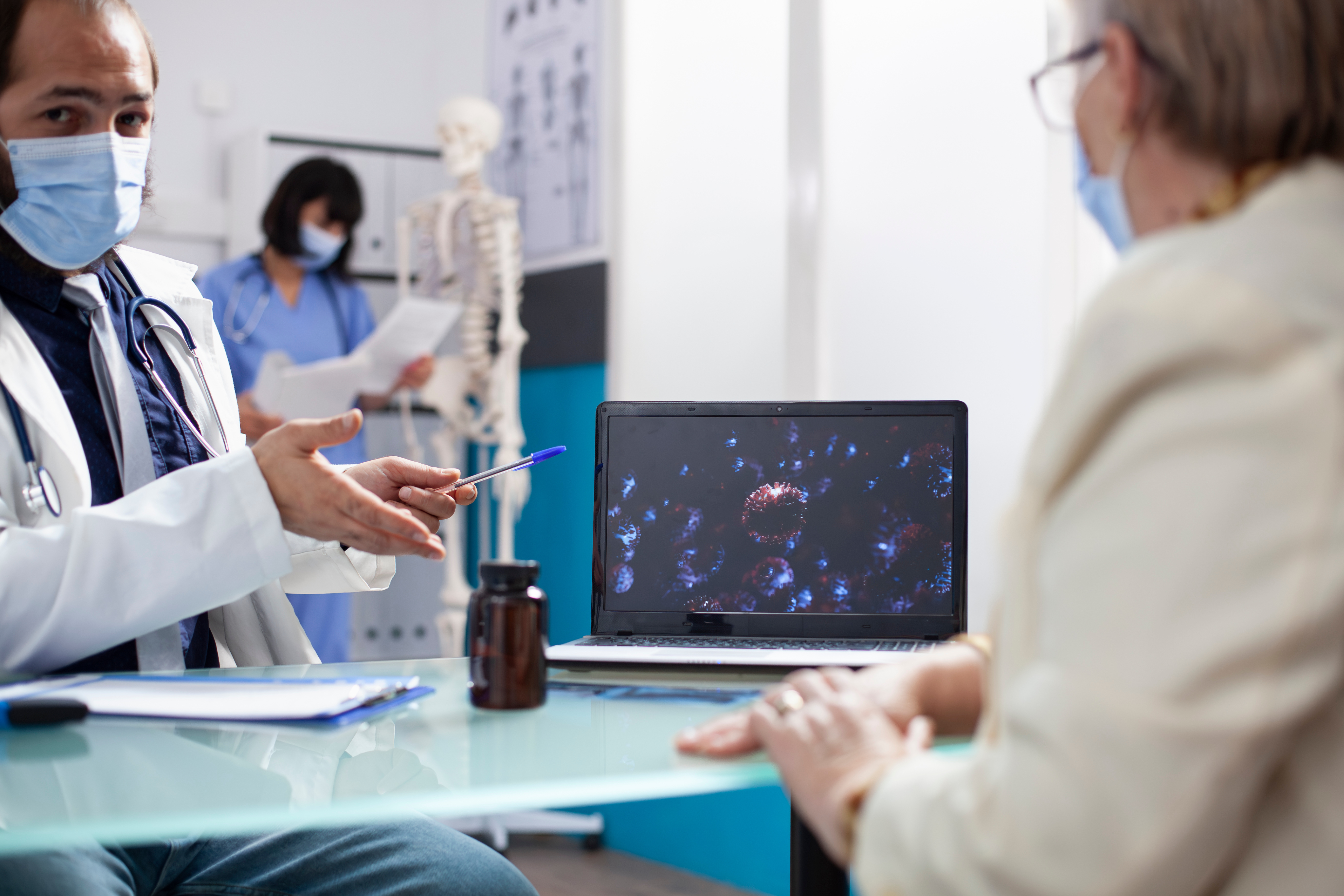
Truth be told, most of us would never see a doctor till it feels like there’s really something seriously wrong with our bodies. Most of us do not bother about the tiredness and the nagging headache. And in the case of mild chest pains, we convinced ourselves it was due to the stresses we face. In fact, by the time we are actually at the clinic, the ailment has already progressed to quite an extent.
That’s precisely what the new medical diagnosis technology using AI is trying to address. And the way it’s doing it isn’t some sci-fi idea but an actual, day-to-day revolution in healthcare.
Intuition-based to Data-based:
The standard medical diagnosis process used for decades involved a doctor’s intuition and experience based on the facts presented by a patient during a 10-min appointment. It is very effective, but the medical diagnosis system is not perfect. Doctors are often overburdened with patients, and patients would have forgotten many of the details of their ailments. There would also be fewer common diseases.
In contrast, AI diagnostics healthcare analyzes the facts from millions and billions of data points that the doctor does not normally come across and can analyze them far more quickly. It doesn’t aim to replace the doctor but to enhance the doctor’s ability to analyze by providing them with information.
Imagine this: one doctor who has specialized in cardiac sciences for 20 years has witnessed millions of ECGs throughout his career. An AI diagnosis machine, which can learn from and analyze millions of ECGs in its training phase, has effectively “seen” much more than a single practitioner. Together, they can only benefit the patient to achieve enhanced diagnostic accuracy.
Where It’s Making the Biggest Difference
Radiology is probably where the AI diagnostics healthcare application is most visible. AI applications can already process chest X-rays and CT scans and detect abnormal signs of pneumonia, tuberculosis, or the first signs of cancer, all within a few seconds. This is critically important in areas with a lack of radiologist specialists.
Pathology also has a role to play. Analysis of cells under the microscope requires a large amount of concentration and time. AI-assisted pathology can recognize abnormal cells consistently, where human eyes (after several hours of work) would potentially fail.
It doesn’t end with images, though. We are using AI to detect sepsis signs from patient records, predict diabetic complications before they are severe, and detect trends in patient mentality from wearable devices. The reach of these technologies is vast.
Apollo Telehealth and the Bridge Between Technology and Patients
All of this progress only matters if it reaches actual patients. That’s where platforms like Apollo Telehealth become important to talk about.
Apollo Telehealth has been working to bring quality healthcare access to people who might otherwise struggle to see a specialist — whether due to geography, time constraints, or cost. When you layer AI diagnostics healthcare capabilities into a telehealth model like Apollo’s, something interesting happens: a person in a smaller town can consult with a doctor who is supported by intelligent diagnostic tools that would previously have only existed in large urban hospitals.
A patient shares their symptoms, uploads relevant test results, and within a consultation, the doctor has access to AI-assisted analysis that helps contextualise the findings more thoroughly. The human doctor still leads the conversation, still builds the relationship, still makes the final call — but they’re doing it with sharper tools.
This is what makes AI diagnostics healthcare genuinely exciting. It’s not about replacing the warmth of a doctor-patient conversation. It’s about making sure that conversation is as informed and accurate as possible.
The Concerns to Take Into Account
Of course, you can’t discuss the advancements of AI in diagnostics without a nod to the genuine concerns in the field. Data privacy remains a very real issue; patient records are highly sensitive, and the systems that process them need to be subject to very strict controls. There is also the concern of “overdependence” on the system, a situation where the clinician too easily accepts an algorithmic conclusion without applying their own clinical knowledge and experience.
Another problem that researchers and industry professionals working with AI diagnostics face is bias in training data. Systems trained primarily on data from certain ethnic groups may not be as effective at correctly diagnosing certain conditions in other populations. While this is certainly a problem, it is also a fixable one that requires deliberate effort and varied data sets.
While these points are valid, they shouldn’t be seen as reasons to stop the development of this amazing technology. Rather, these issues are reasons why we must approach this advancement in healthcare with care and ensure accountability from the beginning.
What It Means to You as a Patient
If you are a patient—and one day we will all be one of them—a shift in the way diagnostics are performed will mean earlier detection of conditions, better prevention of missed diagnoses, and more highly tailored treatment plans. For organizations striving to bring advanced clinical care into the realm of more affordable access, such as Apollo Telehealth, AI diagnostics healthcare will improve your support level without requiring you to spend thousands of dollars and hours traveling the country to meet with a specialized practitioner.
The field of tele medicine has always advanced with better tools. Stethoscopes and MRIs used to be new technologies. AI in diagnostics represents the latest advancement in medical technology, arriving not some time in the future but, rather, in consultations that are occurring in the present.