
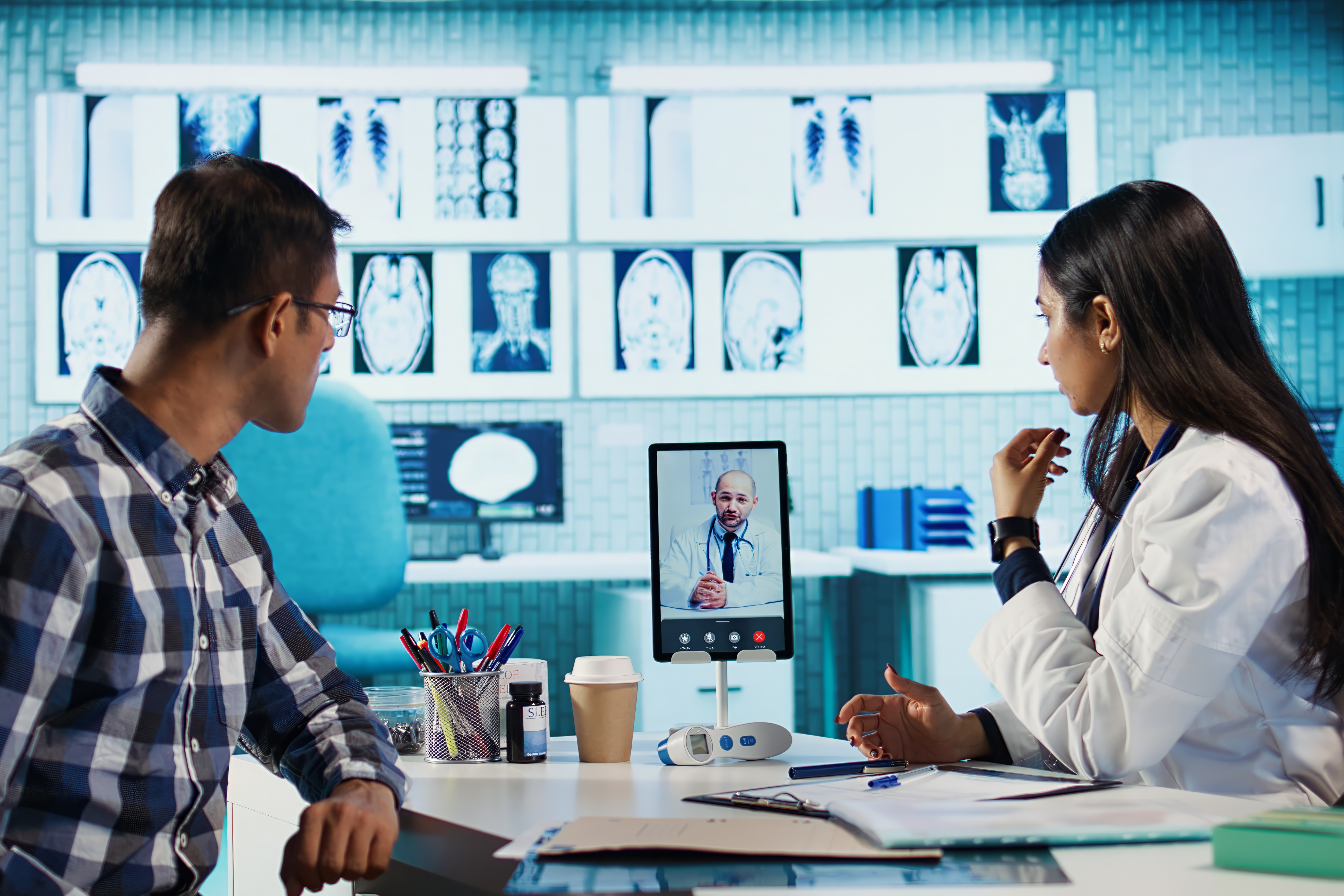
In Patna or Pune, seeing a good cardiologist or dermatologist used to require several hours of travel, waiting, and losing at least half a day, if not more, from work. But that reality is changing at a faster rate than we think.
The rise of the digital health platform in India is not just a tech story; it is also a human story. It is the story of a mother in a tier-3 city who can now see a pediatrician without having to travel to the city. It is the story of a senior citizen who does not have to make complex arrangements to get a follow-up visit. It is the story of how Apollo TeleHealth, for instance, is demonstrating that care need not always be based on physical proximity.
Why Digital Healthcare Platforms Are Growing Rapidly in India
India has a very complicated healthcare geography. There are a few world-class hospitals and specialists in its metros, such as Mumbai, Delhi, Chennai, and Bangalore. On the other end, there are more than 600,000 villages and hundreds of smaller towns and cities where even getting to see a specialist is a huge logistical problem.
Now, considering a doctor-patient ratio that remains far below the level recommended by the WHO, the need for a digital healthcare platform in India is no longer merely a matter of convenience but has become a necessity. It addresses a structural gap that traditional medicine has failed to bridge, even after decades of effort.
The pandemic further highlighted these issues. Instead of five years of gradual adoption, teleconsultation was widely accepted within just a few months. It was no longer viewed as an alternative but as the only viable option. Once people experienced it, they did not return to conventional methods.
“The best technology does not feel like technology. It feels like talking to a person who is genuinely taking the time for you.” – A patient using Apollo TeleHealth for the first time during lockdown in 2021.
What a Digital Healthcare Platform Actually Does
What do we mean when we talk about digital healthcare? There seem to be a lot of misunderstandings and misconceptions surrounding this term. Is it just about downloading certain apps? Or is it the future where AI-based robots will be diagnosing us? Neither is true.
An actual digital healthcare solution for India connects patients to qualified physicians via audio or video consultations, manages prescriptions digitally, stores patient data in one repository, and usually comes with diagnostic services as well. It does not replace your doctor. What it does is remove everything unnecessary in the process of getting the necessary care from your physician.
One such solution provider, Apollo TeleHealth, has done a great job of creating an integrated digital healthcare solution for India. With a a network of specialists across multiple medical fields, along with an easy-to-use app on any phone, they have made sure that consultations that were once out of reach are now accessible to millions of Indians.
Apollo TeleHealth: More Than Just a Video Call
The first reaction upon hearing the term “teleconsultation” is usually a simple video call between doctor and patient. But what Apollo TeleHealth has achieved is far beyond that.
It caters to multi-specialty consultations, which means that one does not need to switch from one app to another in order to consult a cardiologist one week and an orthopedist the next week. Follow-ups are monitored. Digital prescriptions are issued through their platform and could even be forwarded to the partner pharmacies. The medical records are securely kept—not tucked away in a physical file folder at home.
It should also be noted that their product offers a broad range of accessibility and compatibility. The service is available in several languages, with considerations for low-bandwidth connectivity. This cannot be taken for granted if one wants to cater to rural patients effectively.
The Real-World Impact in Smaller Cities and Rural Areas
The impact of digital health is obvious and measurable in urban India. What is even more compelling—perhaps even more exciting—is the work being done in Tier-2, Tier-3, and rural India.
Previously unheard of or poorly managed conditions due to lack of access are now being detected early. Management of chronic conditions like diabetes, hypertension, and thyroid disorders—which require routine monitoring and follow-up, is made vastly easier when patients do not have to make long journeys for every consultation.
A platform like Apollo TeleHealth in India becomes that much more vital in these scenarios. In regions where the closest available specialist is likely 100 km away, teleconsultation is not a luxury but a critical need.
Issues That Still Warrant Candid Discussion
It’s not very productive or helpful to paint a universally bright picture. While a digital health revolution is certainly underway in India, significant gaps exist.
Reliable internet access, though increasing steadily, is still not available in much of the country. Digital literacy can range from fairly advanced to almost non-existent, especially among the elderly patients, who at times have significant trouble operating technology. Data privacy concerns are also legitimate and need to be treated as a core issue and not simply another aspect of compliance.
Reimbursement policies still need to evolve; while the National Digital Health Mission under government guidance is promoting teleconsultations more readily among insurance companies and health policies, they are not always treated as equivalent to physical consultations currently.
The best platforms are cognizant of these barriers and are working around them through means such as voice-based consultations, support in vernacular languages, and easy, aided bookings for patients who have trouble with technology.
Where This Is All Headed
The next chapter in the India digital healthcare platform story is not more online consultations. It is more about integration – linking teleconsultation with at-home diagnostics, wearable health monitoring, AI-guided triage, and individualized preventative care.
We are moving towards a framework in which your health record is not split across ten different care providers and buried in physical folders, but is a unified and usable record. The doctor has your entire medical history before your call begins. Preventive care has become as seamless as curative care and, therefore, more widely used.
Apollo TeleHealth and its counterparts are spearheading the development of this infrastructure. The investments currently being channeled into technology, networks of specialized professionals, rural connectivity, and end-user interface design will decide the future of India’s healthcare system for the next generation.
Conclusion
India has consistently demonstrated competence and commitment to its healthcare system. What has remained a challenge is scale the capacity to offer superior medical attention to 1.4 billion individuals distributed across geographically diverse areas and varying economic backgrounds.
The digital healthcare platform India movement pioneered by platforms like Apollo TeleHealth presents itself as the most convincing response to this issue we have encountered. It’s far from perfect as of yet. However, it is functioning, expanding, and providing indispensable assistance to people searching for better alternatives.
And ultimately, that is what matters most.